Coke Is Up 23%, Pepsi Is Down 12%, Weight-Loss Drugs Are Only Part of the Story
Coca-Cola shares are up 23% this year while PepsiCo has slid 12.5%. As GLP-1 weight-loss drugs change how Americans shop, PepsiCo's heavy snack and North American exposure leaves it cheaper, but riskier.

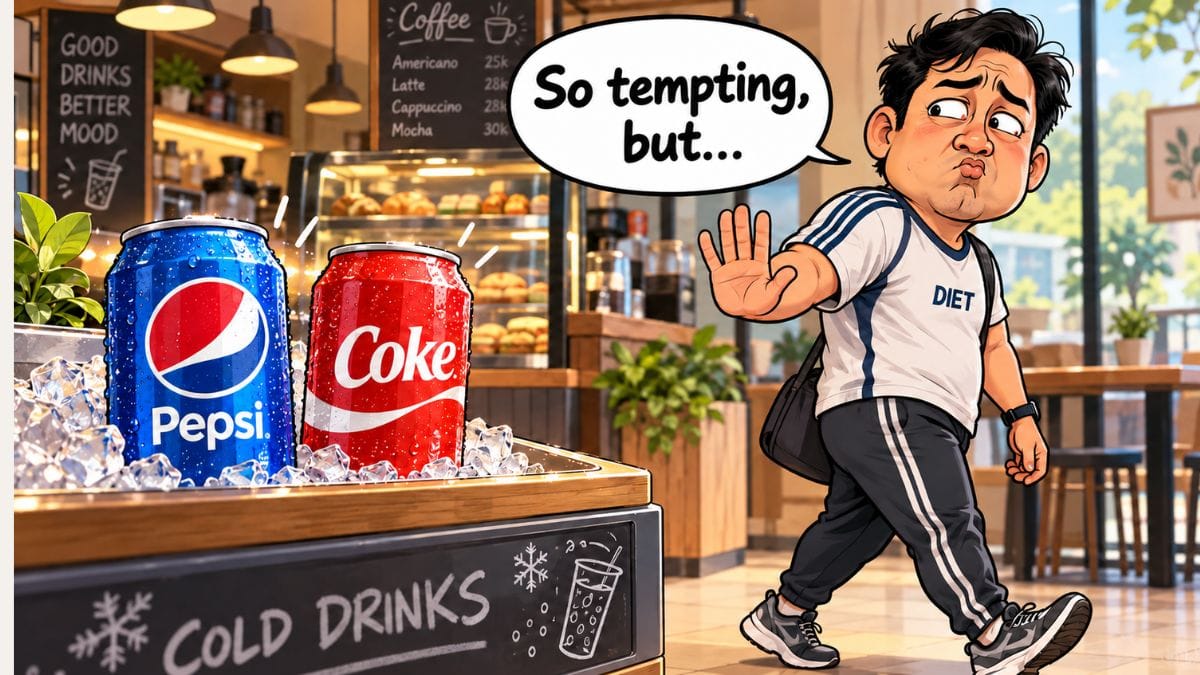
PepsiCo's slump so far owes more to a stalled price-cut strategy than to GLP-1 drugs. But the drugs threaten Pepsi more than Coke, and its cheap valuation reflects that.
Key Takeaways
- Execution, not GLP-1 drugs, explains most of the gap so far. Through Oct. 1, Coca-Cola is up 23.2% and PepsiCo is down 12.5%. PepsiCo's February price cuts of up to 15% haven't lifted volume. In North America, Q2 volume was flat and organic revenue fell 2%.
- GLP-1 drugs are a bigger threat to PepsiCo than to Coca-Cola. Food is 58% of PepsiCo's revenue and North America is 56.3%, versus 40.4% for Coca-Cola. Studies show GLP-1 users cut snack spending by about 10%, but soft drinks fell by a similar amount in BCG's survey, so Coca-Cola's edge is how fast it is adapting.
- PepsiCo is cheap, but the discount may be deserved. It trades at 16.4x earnings, versus 25.9x for Coca-Cola, and a DCF model implies 40.2% upside. That model depends on growth assumptions the drugs put in question. Analysts would buy only at $124.74 to $106.06 a share.
Coca-Cola and PepsiCo are both defensive consumer-staples stocks facing the same new threat: GLP-1 weight-loss and diabetes drugs that appear to change what people buy at the grocery store. Yet Wall Street is treating them very differently. Through Oct. 1, Coca-Cola (KO) shares have gained 23.2% this year, while PepsiCo (PEP) has fallen 12.5%.
The GLP-1 threat is real, but it isn't yet the main reason for the gap. Neither company has reported a measurable hit from the drugs. The split so far comes mostly from execution. The drugs matter more for what could happen next.
What's Driving the Split Today
Coca-Cola's second-quarter revenue rose 7%, with organic growth of about 6%. PepsiCo's revenue rose 6.4%, but organic growth was just 2.4%. Coca-Cola's global volume grew 5%, versus 2% for PepsiCo's beverages and 3% for its food business.
PepsiCo's profit looks better at first glance. Net income jumped 136% to $2.98 billion, while Coca-Cola's rose 16% to $4.43 billion. But the comparison is distorted by a $1.86 billion impairment charge PepsiCo booked a year earlier. Excluding it, net income grew about 3.7%, slower than Coca-Cola's.
The bigger drag is a strategy that hasn't worked. On Feb. 3, PepsiCo cut prices by up to 15% on Lay's, Doritos, Cheetos and Tostitos, keeping package sizes the same. The goal was to win back price-sensitive shoppers and rebuild snack market share.
The results fell short. In North America, second-quarter volume was flat, organic revenue fell 2%, and operating profit, excluding currency effects, dropped 8%. The cuts reduced revenue without producing enough extra volume to make up for it.
PepsiCo is now reportedly planning price increases of 3% to 8% on some chips and soft drinks in late 2026 or early 2027 to offset costs. Management says prices will stay below pre-February levels. Even so, raising prices so soon after cutting them signals that the volume bet didn't pay off.
 Surya Rianto
The GLP-1 Risk on the Horizon
The consumer-behavior data is where the drugs come in. PwC estimates GLP-1 usage reached 21% in May, up from 9% in January 2025. (The report's base population isn't specified, so the figure should be read with caution.)
Studies suggest users shop differently. Research in the Journal of Marketing Research found that within six months of starting the drugs, U.S. households cut grocery spending by 5.3% and snack purchases by 10.1%. Fast-food visits fell 8%. A Boston Consulting Group survey of more than 1,500 users in nine markets found spending on salty snacks and soft drinks fell about 10%, while spending on high-protein foods rose 11%.
On their second-quarter calls, neither company tied results to GLP-1 drugs, though both acknowledged shifting eating and drinking habits. Both say they are adapting:
- PepsiCo is developing sugar-free and hydration drinks, portion-controlled snacks and protein-enhanced products such as Doritos, plus multipacks and variety packs at lower price points.
- Coca-Cola is relying on Fairlife, its dairy brand, which grew 18% in the quarter, and on zero-sugar drinks. Coca-Cola Zero Sugar volume rose 16% and Diet Coke rose 7%. Management hasn't credited GLP-1 users for Fairlife's growth.
Why PepsiCo Is More Exposed
If GLP-1 use keeps spreading, PepsiCo has more to lose, for three reasons.
First, mix. Food, led by Lay's, Doritos and Cheetos, makes up 58% of PepsiCo's revenue, and snacks showed some of the steepest declines in the studies above. Soft drinks fell by a similar amount in BCG's survey, so Coca-Cola isn't insulated. Its edge lies in how fast it is adapting.
Second, geography. North America accounts for 56.3% of PepsiCo's revenue, versus 40.4% at Coca-Cola. Most of the GLP-1 consumption data comes from U.S. households, so PepsiCo is more tied to the market where the effect is best documented.
Third, budgets. Snacks are often the first thing households trim when money is tight, with or without the drugs, so PepsiCo faces pressure from two directions.
For now, neither company expects a GLP-1 hit to 2026 results. Coca-Cola guides to earnings-per-share growth of 9% to 10%, PepsiCo to 5% to 7%.
Is the Discount Big Enough?
PepsiCo trades at 16.4 times earnings, far below its five-year average of 26.8 and Coca-Cola's 25.9. A discounted-cash-flow model puts its fair value at $176.15 a share, implying 40.2% upside from its Oct. 1 price, or roughly $125.65.
Coca-Cola looks stretched by comparison. The same kind of model values it at $77.28, below its $86.28 price.
But a DCF is only as good as its growth assumptions, and those are exactly what GLP-1 drugs put in question. The analysts behind the report are more cautious than their own model. They would buy PepsiCo only at $124.74 to $106.06 a share, below the current price. They see a worst case of $95 and a conservative medium-term target of $144.
Those numbers show why patience matters. From today's price, the worst case implies a drop of about 24% against a gain of about 15% to the target. From the bottom of their buy range, the risk-reward flips: roughly a 10% decline against a 36% gain.
The case for owning PepsiCo is that a low multiple already prices in much of the bad news, and that lower Federal Reserve rates could revive consumer spending. The case against is that a stock can stay cheap if growth never returns.
FAQ
Why is Coca-Cola stock beating PepsiCo in 2026?
Through Oct. 1, Coca-Cola is up 23.2% and PepsiCo is down 12.5%. Coca-Cola's Q2 organic growth was about 6%, versus 2.4% at PepsiCo. PepsiCo's price-cut strategy has also hurt revenue without producing enough extra volume.
Are GLP-1 drugs the main reason PepsiCo stock is falling?
Not yet. Neither company has reported a measurable hit from the drugs. The bigger drag so far is PepsiCo's stalled price-cut strategy, though GLP-1 use is a growing risk to future demand for snacks.
How do GLP-1 drugs change what people buy?
A Journal of Marketing Research study found U.S. households cut grocery spending by 5.3% and snack purchases by 10.1% within six months of starting the drugs. Fast-food visits fell 8%. A BCG survey of more than 1,500 users in nine markets found spending on salty snacks and soft drinks fell about 10%, while high-protein food rose 11%.
How many people use GLP-1 drugs?
PwC estimates usage reached 21% in May 2026, up from 9% in January 2025. The report's base population isn't specified, so the figure should be read with caution.
Why is PepsiCo more exposed to GLP-1 drugs than Coca-Cola?
Food makes up 58% of PepsiCo's revenue, led by Lay's, Doritos and Cheetos. North America accounts for 56.3% of its revenue, versus 40.4% for Coca-Cola, and most GLP-1 consumption data comes from U.S. households. Snacks are also often the first thing households cut when budgets tighten.
Did PepsiCo's price cuts work?
Not so far. PepsiCo cut prices by up to 15% on Feb. 3, 2026, on brands including Lay's, Doritos, Cheetos and Tostitos. In Q2, North American volume was flat, organic revenue fell 2% and operating profit, excluding currency effects, dropped 8%. The company is reportedly planning price increases of 3% to 8% in late 2026 or early 2027.
How are Coca-Cola and PepsiCo adapting?
Coca-Cola is leaning on Fairlife dairy (up 18% in Q2) and zero-sugar drinks. Zero Sugar volume rose 16% and Diet Coke 7%. PepsiCo is developing sugar-free and hydration drinks, portion-controlled snacks, protein-enhanced products and lower-priced multipacks.
Is PepsiCo stock undervalued?
On earnings, it looks cheap. PepsiCo trades at 16.4x, versus a five-year average of 26.8x and Coca-Cola's 25.9x. A DCF model puts fair value at $176.15 a share, or 40.2% above the Oct. 1 price. But a DCF is only as reliable as its growth assumptions, and the analysts behind the report see a worst case of $95 and a conservative target of $144. This is not investment advice.
What is the 2026 earnings outlook for each company?
Coca-Cola guides to earnings-per-share growth of 9% to 10%, and PepsiCo to 5% to 7%. Neither expects GLP-1 drugs to hurt 2026 results.
What should investors watch next?
Whether North American volume recovers after PepsiCo raises prices, whether either company starts naming GLP-1 drugs as a factor in results, and whether Fairlife and zero-sugar growth keep offsetting softness in Coca-Cola's core soda.
The numbers are only the beginning.
Every week, Mikirduit US breaks down earnings, valuations, catalysts, and risks across U.S. stocks—so you can see what the market may be missing.
Mikirduit US provides independent financial research and educational content. This article is not personalized investment advice, and investors should conduct their own research before making investment decisions.