Divided Government 2026: 6 Stock Sectors Under the Spotlight
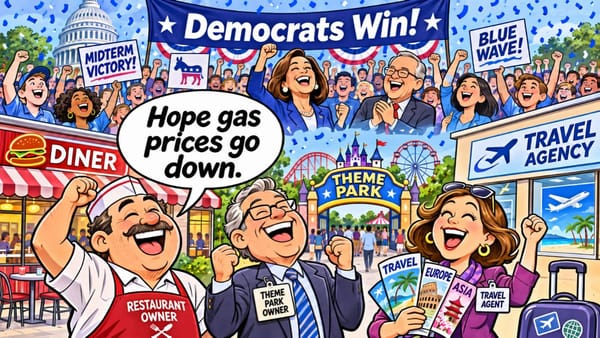
Democrats are projected to win Congress, creating a divided government. The S&P 500 rose after four of the last five similar midterms, but companies tied to Trump-era deals, from Intel to AI and pharma, may face closer oversight.

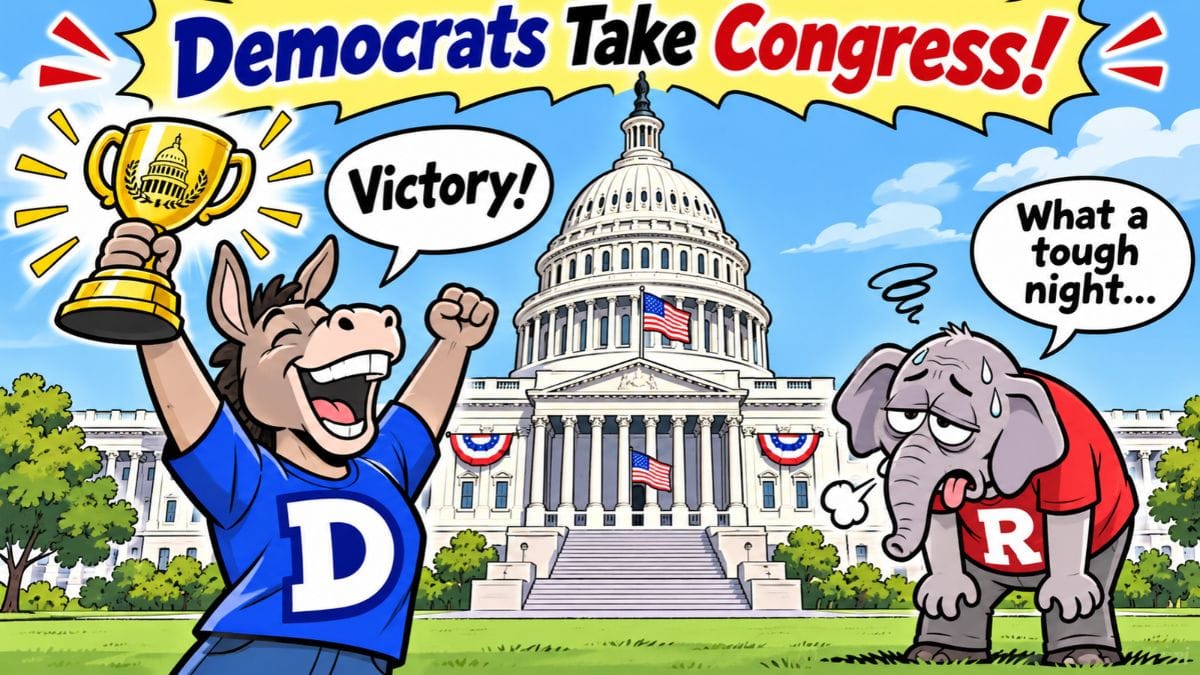
Mikirduit – The projected Democratic win would split power in Washington. A Republican president would face a Congress controlled by the opposing party.
Key Takeaways
- Democrats are projected to win Congress based on early counts, which would create a divided government under a Republican president.
- Historically, the S&P 500 rose after four of the last five midterms in which the opposition took Congress. The one exception was 2018.
- Companies that made deals with the Trump administration may face more congressional oversight, including Intel, big tech, AI, pharma, and oil and gas.
- Some sectors could benefit, including healthcare insurers, import-heavy retailers, and defensive consumer stocks.
This is a common outcome. In the last five midterm cycles, the opposition party often took the House, the Senate, or both.
Will the Stock Market Fall If the Opposition Controls Congress?
Not necessarily. We reviewed the S&P 500’s performance over 1 to 12 months after the opposition won in 2006, 2010, 2014, 2018, and 2022.
- Only 2018 saw a decline, with the index falling 2.2% in the first month. That was during Donald Trump’s first term.
- The market began to rebound within three months of that 2018 drop.
- In the other four cycles, the market trended upward.
Two factors help explain why a divided government is not always negative:
- Prices often adjust in advance. If investors expected the result, it may already be priced in.
- Policy risk can fall. A divided government makes sudden, sweeping policy changes less likely.
Important note: Congressional control is only one factor. Macroeconomic conditions, such as inflation, interest rates, and energy prices, can matter more.
Stocks That May Face More Scrutiny
An opposition-controlled Congress can use its oversight powers to examine companies that struck deals with the administration. Here are the main areas to watch.
1. Intel (NASDAQ: INTC)
Intel agreed to a deal that gives the US government an ownership stake. Congress could review the terms, possible conflicts of interest, and how the funds are used.
2. Amazon, Apple, and Meta (NASDAQ: AMZN, AAPL, META)
These companies were involved in the White House ballroom project. Lawmakers could examine donations, the benefits companies received, and any links to government policy plans.
3. AI and Data Center Stocks
This group includes Alphabet (GOOGL), Oracle (ORCL), Microsoft (MSFT), Nvidia (NVDA), AMD, and Broadcom (AVGO).
According to a Reuters report on October 29, 2026, Democrats are preparing investigations into data center taxation and AI risks. Senator Ron Wyden, a senior member of the Senate Finance Committee, announced two proposals in August 2026 and moved them into fuller draft legislation in October 2026:
- A new tax on the gross revenue of certain data center operators
- Removal of tax breaks that currently lower data center investment costs
4. Elon Musk-Related Stocks (TSLA, SPCX)
Musk and Trump were close during the campaign and early in the administration. Their relationship soured after Musk opposed a Trump-backed bill and left his role leading the Department of Government Efficiency. Even so, Musk’s companies could face questions about government contracts, subsidies, and conflicts of interest.
5. Pharmaceutical Stocks (NVO, LLY, MRK, GILD, GSK, NVS, SNY)
Several drugmakers have pricing agreements with the Trump administration. The impact could go either way:
- Positive: If Congress renegotiates the deals on terms more favorable to the companies.
- Negative: If Democrats instead tighten drug pricing rules, which could have a larger effect.
6. Oil and Gas Stocks (XOM, CVX, SHEL, BP, COP)
Democrats have signaled interest in examining the ties between energy companies and Trump administration policy. Since August 4, 2026, the issues raised include:
- Higher fuel prices linked to the Iran conflict
- Dividends and share buybacks
- Relationships with the administration
- Plans to expand oil and gas production
When Democrats previously controlled the House, they summoned ExxonMobil, Chevron, BP, and Shell. They asked why gasoline prices stayed high, why production did not rise faster, and why profits went to shareholders rather than production. The main market concern is a possible windfall profit tax or changes to energy policy and permitting.
What Democrats Are Likely to Prioritize
Healthcare Costs
Democrats want to restore the enhanced Affordable Care Act (ACA) premium tax credits, which expired at the end of 2025, to keep premium increases manageable. They also want to relax or repeal Medicaid work requirements and keep a close eye on drug prices.
Under the 2025 Republican-backed law, some adult Medicaid recipients must show at least 80 hours per month of work or other qualifying activity. Eligibility checks also happen every 6 months instead of every 12, with stricter verification. If Democrats succeed in reversing these rules, health insurers with ACA and Medicaid exposure, such as Centene (CNC), could benefit.
Tariffs
Democrats plan to oppose Trump’s import tariffs, which raise costs for importers and consumers. Tariff policy is already visible in corporate results: Pentair, for example, booked roughly $8 million in IEEPA tariff refunds in its latest quarter, as covered in our breakdown of Pentair’s Q3 2026 earnings. Lower tariffs could help import-heavy retailers and brands such as Apple (AAPL), Nike (NKE), Walmart (WMT), Amazon (AMZN), and Target (TGT).
The US-Iran Conflict
Democrats are also pushing to ease the US-Iran conflict, which could stabilize oil prices. That would help cool inflation and reduce the need for aggressive interest rate hikes. However, we believe this will take time.
Our Conclusion
If Democrats’ plans proceed smoothly, we believe a Democratic Congress could reduce uncertainty over the medium term. Sectors that could benefit include:
- Defensive consumer goods stocks
- Petrochemicals, if oil prices become more stable
- Insurers tied to ACA and Medicaid
Investors should still watch for oversight risks in tech, AI, energy, and pharma.
Mikirduit US provides independent financial research and educational content. This article is not personalized investment advice, and investors should conduct their own research before making investment decisions.