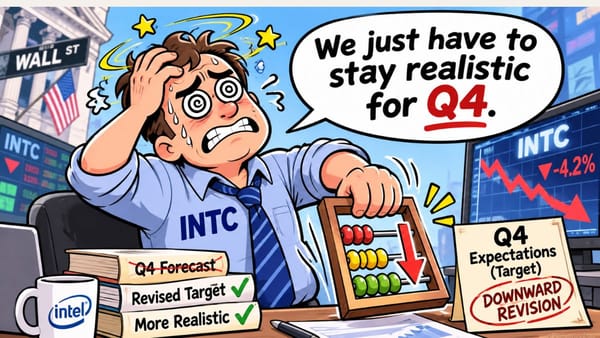
How to Invest in US Stocks Without Buying the Top: 8 Smart Rules
You can pick a great company and still lose money if you buy at the wrong price. Learn 8 practical rules for US stock investors: diversify smartly, check valuations, scale in with DCA, and plan your exit before the market turns.


Mikirduit – You can pick a great company and still lose money on it. The reason is usually not the business. It's the price you paid and the moment you paid it.
When the market falls, it is tempting to blame bad luck. But many drawdowns hurt most the investors who bought everything at once near a peak, held a single sector, or had no plan for when to sell. This guide walks through eight practical rules for US stock investors who want to manage those risks more carefully. None of them can remove risk, but each can help you make decisions with a clearer head.
Quick answer: You can't predict market tops, but you can reduce your exposure to bad timing. Diversify across sectors, check valuations, buy in stages, use dollar-cost averaging, and set a selling plan before you invest. No strategy guarantees against loss.
Rule 1 and 2: Diversify, but Understand What It Can't Do
Diversification means spreading your money across assets that don't all react to the same news in the same way. It is one of the most widely taught risk-management principles in investing, and for good reason: if one holding drops sharply, the others may soften the blow.
But diversification has limits. In a broad sell-off, stocks, sectors, and even other asset classes can fall at the same time. A diversified portfolio can still show an unrealized loss, which is a loss on paper that becomes real only if you sell.
Pick holdings with different risk profiles. Owning five bank stocks is not diversification. If you already hold a financial company, consider adding businesses that respond differently to the economy, such as:
- Technology
- Healthcare
- Energy
- Consumer staples
- Industrials
For many everyday investors, a low-cost, broad-market index fund is a simple way to get this spread without picking individual stocks. Individual stocks make sense only if you are comfortable researching them and accepting more volatility.
Rule 3 and 4: Watch Your Entry Point and the Market Cycle
Even a strong company can lose you money if you buy near a market high. Two simple checks can help you judge whether risk may be elevated.
Check the index. Are the S&P 500 and Nasdaq-100 repeatedly setting all-time highs? Frequent record highs can suggest the market is in a mature or richly priced phase. That is a caution flag, not a prediction. Markets have often kept climbing after records, and they have also reversed without warning.
Check the valuation. Is the stock's price reasonable compared with the growth you can realistically expect from the business?
Be careful with richly valued sectors. When a sector such as technology is priced for strong growth, even a small earnings miss can trigger a large price drop. The risk can be higher when companies are spending heavily on new capacity or projects whose returns are still uncertain.
The lesson is not to avoid growth stocks. It is to know what expectations are already built into the price. Anthropic (NASDAQ: ANT) Is the Third-Worst Mega-IPO Debut in a Decade. What Does It Signal?
Rule 5: Use Valuation Tools, Then Research the Business
Valuation helps you ask whether a price looks stretched or reasonable. No single metric gives the full picture, so it helps to use a few.
Metric | What it tells you | Watch out for |
|---|---|---|
EV/EBITDA | Compares a company's total value (including debt) with its operating earnings, often against its own 3 to 5 year range | Less useful for companies with volatile or negative earnings |
P/E ratio | Price relative to earnings per share | Can be distorted by one-time items |
Free cash flow yield | Cash generated relative to market value | Heavy investment spending can depress it temporarily |
A multiple near the low end of its own historical range may suggest a relative discount. It does not mean the stock is a bargain. A stock can look cheap because its business is deteriorating.
After screening for price, look at the business itself:
- Short-term and long-term risks and opportunities
- Earnings quality and balance sheet strength
- Competitive position and industry trends
- Dividend history, if applicable, since dividends can provide some return while you wait
Rule 6 and 7: Don't Go All In; Consider Dollar-Cost Averaging
Putting your entire amount into the market on a single day exposes you to one price. Buying in stages spreads that risk over time.
Staged entry. Split a planned purchase into several tranches. Some investors use as few as three when their conviction is high, and up to ten when they are unsure about volatility. There is no magic number. The point is to avoid betting everything on one entry price.
Dollar-cost averaging (DCA). If you invest from your paycheck, DCA means buying on a fixed schedule with the same dollar amount, not the same number of shares. When prices are lower, your fixed amount buys more shares. When prices are higher, it buys fewer.
For example, investing $500 each month means you automatically buy more shares in a dip and fewer in a rally, without having to guess the bottom.
DCA is a discipline tool, not a guarantee. It does not ensure a profit, and it does not protect you from losses if prices keep falling over a long period.
Rule 8: Plan Your Exit Before You Enter
Most investors spend hours deciding what to buy and almost no time deciding when to sell. A plan made in advance can reduce emotional decisions when markets get noisy.
Set a profit-taking rule. Decide ahead of time at what gain you will begin selling gradually. A 30% gain is only an illustration, not a recommendation. Your target should reflect your goals, your time horizon, and your tax situation.
Match your holding style to the asset.
- Long-term holding generally suits financially strong companies with durable business models and reliable dividends.
- Thinly traded, heavily promoted, or highly speculative stocks carry a greater risk of sharp reversals when sentiment fades.
Mind the taxes. In the US, selling a stock at a gain can trigger capital gains tax, and holding for more than one year may qualify for different rates than shorter holds. Rules change, so confirm current details with the IRS or a tax professional.
There is no one-size-fits-all move. The right action depends on your risk tolerance, your cash position, your timeline, and when you will need the money.
 Surya Rianto

Frequently Asked Questions
Can diversification prevent all losses? No. Diversification can reduce the impact of any single holding, but it cannot prevent losses during broad market declines.
Is it a bad time to invest when the S&P 500 is at an all-time high? Not necessarily. Markets can keep rising after record highs. Frequent highs are a reason to be more selective on valuation and to consider buying in stages, not a reason to stay out entirely.
What is a good EV/EBITDA ratio? There is no universal number. It varies by industry, growth rate, and interest rates. Comparing a company with its own history and with close peers is more useful than using a fixed cutoff.
Is dollar-cost averaging better than investing a lump sum? Research comparing the two often finds lump sum investing performs better more often when markets rise over time, but DCA can feel easier to stick with and may reduce regret. The better choice depends on your situation and comfort with risk.
When should I sell a stock? Ideally, you decide before you buy. Common triggers include reaching a target gain, a change in the company's fundamentals, or a need for the money.
Bottom Line
Nobody can reliably call the top of the market. What you can control is how much you pay, how diversified you are, how gradually you invest, and whether you have a plan for selling. Build those habits first, and market swings become easier to handle.
Sources and Further Reading
Before publishing, add links to primary sources you have verified, for example:
- Investor.gov (SEC): Diversification and asset allocation
- FINRA: Investing basics
- IRS: Topic No. 409, Capital gains and losses
- Index data from S&P Dow Jones Indices and Nasdaq, with the date range cited
Mikirduit US provides independent financial research and educational content. This article is not personalized investment advice, and investors should conduct their own research before making investment decisions.