Novo Nordisk Opens the Door to Bigger Deals as the Wegovy Era Faces Its Next Test
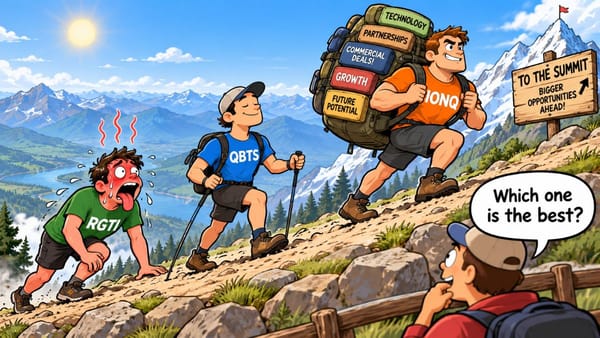
Novo Nordisk is signaling bigger M&A ambitions as it battles Eli Lilly, pricing pressure and the need to build the next generation of obesity drugs.

Mikirduit — Novo Nordisk (NYSE: NVO) is opening the door to larger acquisitions as the maker of Wegovy looks for ways to strengthen its obesity pipeline, offset mounting pricing pressure and prepare for the eventual expiration of semaglutide patents.
3 Key Takeaways
- Novo Nordisk is opening the door to bigger acquisitions as it looks to strengthen its obesity pipeline, diversify beyond semaglutide and prepare for a more competitive post-Wegovy market.
- Wegovy demand remains strong, but pricing power is weakening. Higher prescription volumes are being partly offset by lower realized prices as Novo competes with Eli Lilly and deliberately expands access through rebates, insurance coverage and self-pay channels.
- NVO’s valuation is far below Lilly’s, but a rerating likely depends on pipeline execution. Investors will be watching whether Novo can turn its cash generation, partnerships and potential acquisitions into the next generation of blockbuster obesity drugs.
At its Capital Markets Day in London on Sept. 21, Chief Executive Mike Doustdar laid out a more aggressive long-term strategy. Novo aims to launch more than five multi-blockbuster drugs by 2030 and generate more than DKK150 billion, or roughly $23 billion, in risk-adjusted pipeline sales by 2035. Management also signaled that acquisitions could become a bigger part of the effort.
The timing matters.
Novo built one of the pharmaceutical industry’s most profitable franchises around semaglutide, the active ingredient in Ozempic and Wegovy. But investors are increasingly focused on what comes next as competition from Eli Lilly (NYSE: LLY) intensifies, realized prices fall and patent protection begins to expire in several markets in the coming years.
That makes Novo’s willingness to pursue external innovation more than a side story. It is becoming central to the investment case.
The company has already started moving in that direction.
On Sept. 17, Novo entered a collaboration with Orbis Medicines that could be worth as much as $1.4 billion. The agreement focuses on developing next-generation oral macrocycle therapies for cardiometabolic diseases. Novo is also making a strategic investment in Orbis.
The partnership gives Novo access to Orbis’s AI-enabled nGen discovery platform, which is designed to identify orally bioavailable macrocycles. The technology could potentially turn biological targets that have traditionally required injectable medicines into oral therapies.
The economics of the deal include upfront and milestone payments, along with tiered royalties on future sales.
That provides a useful clue about what Novo may seek in future acquisitions.
The company may not simply be looking for another GLP-1 drug. It could instead target technologies that broaden the obesity and cardiometabolic franchise through oral delivery, new biological targets, amylin, multi-agonists, muscle preservation, cardiovascular benefits or longer dosing intervals.
Wegovy Demand Is Still Strong, but the Economics Are Changing
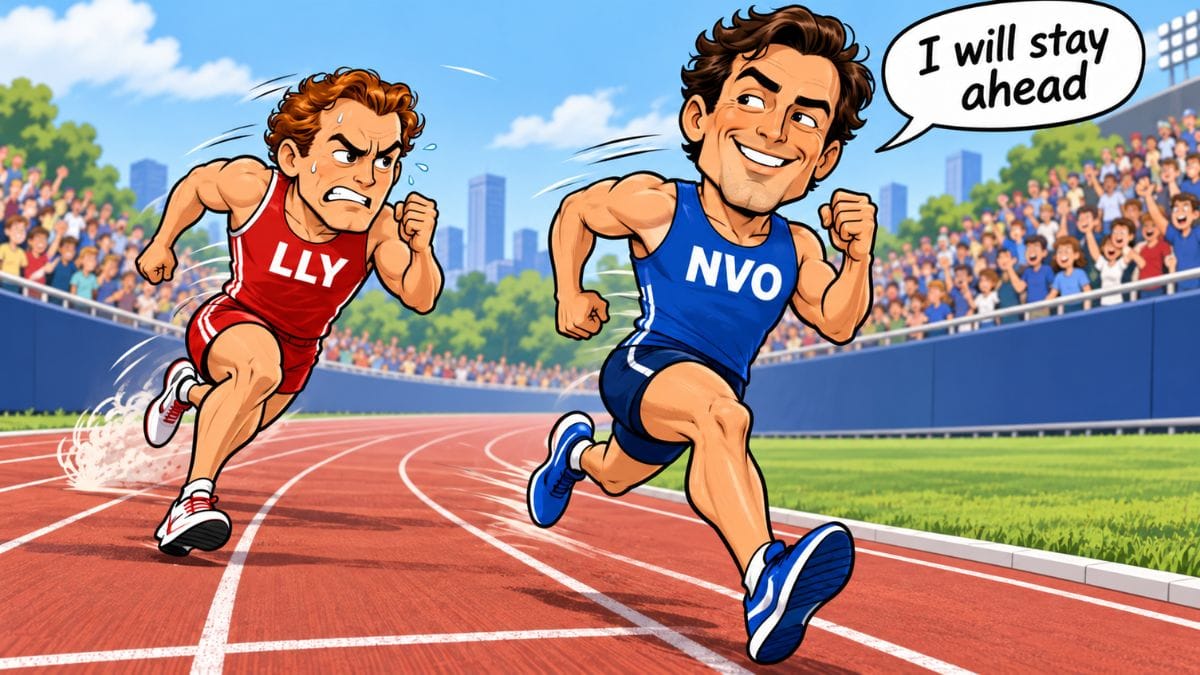
Novo remains locked in an increasingly intense battle with Eli Lilly in obesity medicine.
One of Novo’s biggest launches this year has been the Wegovy pill, introduced in the U.S. on Jan. 5, 2026. By June, cumulative prescriptions had already exceeded 3 million.
More importantly, Novo said most new Wegovy pill prescriptions came from patients who had not previously used a GLP-1 treatment.
That means the oral formulation appears to be doing more than cannibalizing injectable Wegovy. It is also bringing new patients into the category.
But higher volume does not necessarily mean significantly higher revenue.
Novo’s adjusted U.S. sales fell 11% in the first quarter of 2026, despite rising Wegovy volumes. The problem was lower realized pricing.
Realized price is what Novo effectively receives after rebates to insurers and pharmacy-benefit managers, government rebates, discounts, access agreements, patient-support programs and other gross-to-net adjustments.
That distinction matters because the obesity market is moving from an era of scarcity to one of competition.
Eli Lilly Is Changing the Pricing Equation
Between roughly 2022 and 2024, the key question in obesity drugs was often not which medicine was cheapest, but whether patients could get one at all.
Demand exceeded supply, and Novo benefited from that scarcity.
The market now looks very different.
Lilly’s Zepbound has emerged as a major alternative, giving insurers and pharmacy-benefit managers more leverage in negotiations. Novo itself has expanded the Wegovy franchise across injectable, high-dose and oral formulations.
The result is a shift from scarcity pricing to competitive pricing.
A payer can increasingly tell Novo that Lilly is offering better economics in exchange for preferred formulary placement. Novo may then have to respond with larger rebates or broader access terms.
Lilly faces the same pressure in reverse.
The long-term consequence is that both companies could keep adding patients while earning less revenue per patient.
That is one reason prescription growth alone is no longer enough to judge Novo’s performance.
 Surya Rianto
Novo Is Also Lowering Prices Deliberately
Not all of the pricing pressure is defensive.
Novo is intentionally sacrificing some economics per patient to broaden access.
The company has said the global GLP-1 market should continue expanding, with patient reach and volumes increasing, but that those gains will be partly offset by lower realized prices.
The strategy can be summarized simply:
lower price → broader insurance coverage → larger patient pool → more prescriptions.
If net price falls 15% but volume rises 30%, revenue can still grow.
If net price falls 15% and volume rises only 10%, revenue comes under pressure.
That relationship between volume and realized price may be one of the most important variables for Novo over the next several years.
The company has also expanded its self-pay strategy through NovoCare Pharmacy and telehealth channels, reducing its dependence on traditional insurance access.
At Capital Markets Day, management said roughly half of Wegovy revenue now comes from self-pay customers, another indication that the commercial model is changing.
Novo Has Raised Its 2026 Guidance Twice
The encouraging part of the 2026 story is that management has become materially less pessimistic.
At the beginning of the year, Novo expected adjusted sales and operating profit to decline 5% to 13% at constant exchange rates.
After the first quarter, the company improved the range to a decline of 4% to 12%.
After the second quarter, it raised guidance again to between flat and a 6% decline.
That improvement matters because the second quarter showed a clear recovery.
Adjusted sales increased 7% at constant exchange rates, while adjusted operating profit rose 11%.
The numbers suggest stronger GLP-1 volume is beginning to offset part of the pressure from lower prices.
Still, management is not signaling a return to strong growth yet.
Pricing pressure in the U.S., competition from Lilly and the eventual expiration of semaglutide exclusivity remain major concerns.
The Bigger Question Is What Replaces Semaglutide
This is why Novo’s acquisition strategy matters so much.
Ozempic and Wegovy remain the foundation of the company’s economics. Investors increasingly want evidence that Novo can build another generation of medicines before semaglutide loses exclusivity in key markets.
Novo’s internal pipeline already includes CagriSema and zenagamtide, while the company is pushing harder into oral therapies and next-generation amylin-based treatments. Its 2030 strategy calls for at least five Phase 3 programs in obesity and diabetes and at least five more in other therapeutic areas.
But management is no longer relying exclusively on internal R&D.
The Orbis deal shows one route: acquire technology through partnerships and licensing.
A larger acquisition would be another.
That means potential deals should probably be evaluated not simply by whether the target owns another obesity drug, but by whether it solves a strategic gap in Novo’s portfolio.
The most valuable targets could offer something Novo does not already have at scale: small-molecule oral GLP-1 technology, differentiated multi-agonists, muscle-preserving mechanisms or other cardiometabolic platforms.
Novo’s Valuation Reflects Much Lower Expectations Than Lilly’s
Novo’s lower valuation is another reason the stock is attracting attention.
The shares trade at roughly 3.5 times sales, compared with about 13 times for Lilly.
On an EV/EBITDA basis, Novo trades around 7.4 times, while Lilly is closer to 27 times.
Novo’s multiple is also well below its five-year historical average EV/EBITDA of roughly 23.1 times.
That gap tells a clear story.
Investors are assigning Lilly a premium for stronger expected growth and pipeline momentum, while Novo is being discounted for pricing pressure, competitive losses and uncertainty surrounding the post-semaglutide era.
The discount therefore does not disappear simply because the stock looks cheap.
For Novo to earn a sustained rerating, investors will likely need evidence that management can convert its balance sheet and cash generation into a new generation of commercially significant drugs.
That makes the company’s latest M&A comments particularly important.
Novo is no longer merely trying to defend Wegovy.
It is beginning to build what comes after it.
The numbers are only the beginning.
Every week, Mikirduit US breaks down earnings, valuations, catalysts, and risks across U.S. stocks—so you can see what the market may be missing.
Mikirduit US provides independent financial research and educational content. This article is not personalized investment advice, and investors should conduct their own research before making investment decisions.