Abeona Therapeutics Stock Falls Nearly 40% After Q3 Miss: What Investors Should Know
Abeona Therapeutics (ABEO) fell as much as 39% after a Q3 2026 revenue miss, shrinking margins, and a failed ZEVASKYN batch. Here is what the numbers show, how Medicare’s NTAP status fits in, and what the ABO-801 acquisition and share offering mean for investors.

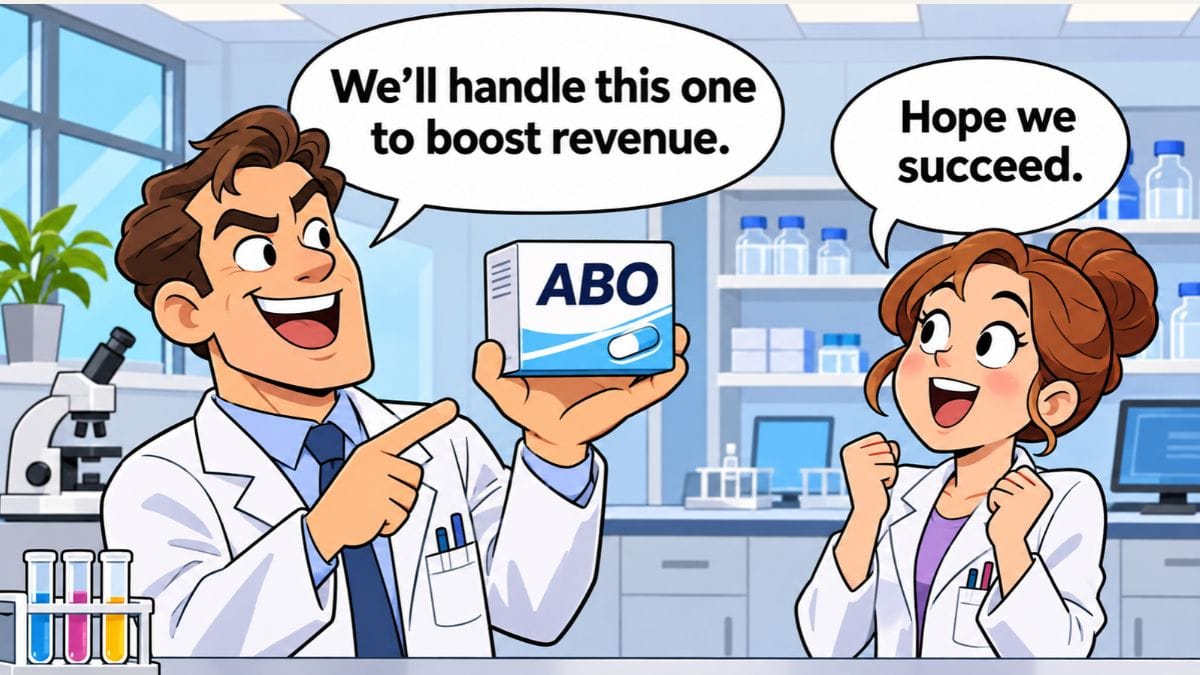
Mikirduit – Abeona Therapeutics (NASDAQ: ABEO) dropped as much as 39.09% in a single session after the company reported third-quarter 2026 results. Revenue came in light, margins slipped, and a manufacturing setback added to the worry. At the same time, the company announced a new drug acquisition and a stock offering that will dilute existing shareholders.
Key Takeaways
- Revenue missed, and margins moved the wrong way. Abeona’s Q3 2026 revenue of about $13.5 million fell below analyst estimates, while gross margin slipped to 57.7% from 63.2% as cost of sales grew faster than sales.
- The smaller net loss is mostly an accounting effect. A roughly $6.4 million non-cash warrant gain helped cut the loss to $4.8 million. Without it, the loss would be near $11 million, still an improvement but less dramatic.
- Dilution and a long runway add risk. The ABO-801 acquisition and private placements add about 12.49 million shares (roughly 20.1%), and the new drug’s Phase 3 results are not expected until the end of 2028.
Here is what the numbers show, what worked, and what to watch next.
The Revenue Miss
Abeona reported third-quarter revenue of about $13.5 million. Analysts had expected somewhere between $13.85 million and $18.07 million.
On the surface, growth looks decent. Revenue rose 18.3% from the second quarter. Because the company only began generating sales in the fourth quarter of 2025, quarter-over-quarter is the most meaningful comparison available.
The problem is what happened below the top line. Cost of sales climbed 36%, roughly twice as fast as revenue. Gross margin fell to 57.7% from 63.2%. For a company in its first year of selling a product, investors want to see margins improve as volume grows. That did not happen this quarter.
About ZEVASKYN
Abeona’s main product is ZEVASKYN, a gene therapy made from a patient’s own cells. It treats wounds caused by recessive dystrophic epidermolysis bullosa (RDEB), a rare inherited condition that makes the skin extremely fragile.
Launch progress so far:
- 15 patients have been treated since launch in Q4 2025, including 6 in Q3
- The company has 8 Qualified Treatment Centers, but only 4 have treated a patient
Adoption is moving, but slowly. That is typical for a rare-disease therapy, where each patient requires a specialized center, careful scheduling and a custom-made product.
The Failed Batch
One detail deserves more attention than it received. During the quarter, one patient’s treatment could not be recorded as revenue because the manufactured batch failed identity testing.
This matters because ZEVASKYN is autologous, meaning it is made from the patient’s own cells. A failed batch is not a unit pulled off a shelf. It means lost revenue and production costs that cannot be recovered. One event does not make a trend, but with so few patients treated so far, a single failure has an outsized effect on results. Investors should look for any repeat in upcoming filings.
 Surya Rianto

NTAP Status: Helpful, but Often Misunderstood
ZEVASKYN is set to receive New Technology Add-on Payment (NTAP) status from Medicare effective October 1, 2026, so any effect would begin showing in the fourth quarter.
NTAP is an extra payment Medicare can make to hospitals that use new, high-cost technologies for inpatient care. It does not mean:
- Medicare is subsidizing patients directly
- Abeona receives an additional payment
- Every patient will automatically get the therapy
Medicare normally pays hospitals a fixed amount per inpatient stay under its Diagnosis-Related Group (DRG) system. For a therapy this expensive, that fixed payment may fall well short of the hospital’s real cost. Under the general CMS rule, the NTAP amount is the lesser of 65% of the technology’s cost or 65% of the amount by which the case cost exceeds the DRG payment. So NTAP will not necessarily cover 65% of ZEVASKYN’s price. The actual figure depends on the claim and CMS rules.
The practical effect is that hospitals may find it easier to absorb the cost of treating Medicare patients. That could help access over time. It is not a direct boost to Abeona’s revenue.
Why the Net Loss Shrank
Abeona’s net loss improved to $4.8 million from $20.2 million in the prior quarter. That looks like a big step forward, but most of it is not operational.
The company booked a non-cash gain of roughly $6.4 million from a change in the fair value of its warrant liabilities. Strip that out, and the loss would be around $11 million. That is still a real improvement from $20.2 million, helped by a 26.6% drop in research and development spending to $3.67 million.
The takeaway: the underlying loss is getting smaller, but not as dramatically as the headline suggests. Accounting gains like this can reverse in later quarters.
The ABO-801 Acquisition and Dilution
Abeona also announced it is acquiring APT-1011 from Ellodi Pharmaceuticals and renaming it ABO-801. It is an oral drug candidate for eosinophilic esophagitis (EoE), a chronic inflammatory condition of the esophagus that makes swallowing difficult. About 360,000 people in the U.S. have been diagnosed, a much larger market than RDEB.
Key terms:
- Upfront payment: 4.49 million new shares to Ellodi, issued at $4.45 per share
- Approval milestone: $30 million if the FDA approves ABO-801
- Sales milestones: up to another $30 million if sales targets are met
- Timeline: Phase 3 trial start targeted for Q2 2027, with primary results expected by the end of 2028
Abeona is also raising money through private placements (PIPEs) of common stock and pre-funded warrants at $3.75 per share. That price is above the November 9 closing price of $2.54, which suggests institutional buyers see value, though it does not guarantee the stock will hold.
Combined, the deal and the placements add about 12.49 million new shares, or roughly 20.1% of the share base used in the company’s calculation. Existing shareholders will own a smaller slice of the company.
What to Watch
- 2027 ZEVASKYN results. The first full year of sales will show whether the product can generate real cash and move the company toward profitability.
- Margins. Watch whether gross margin recovers and whether more manufacturing failures occur.
- Treatment center activity. Four of eight centers have yet to treat a patient. Activating them is key to growth.
- ABO-801 progress. The path to a Phase 3 start in 2027 is long, and every regulatory step can move the stock.
- Future milestone costs. If ABO-801 succeeds, up to $60 million in milestone payments come due.
Bottom Line
Abeona’s stock traded near $2.45 recently. After a drop of this size, the price may look appealing to some investors. Before acting on that instinct, it helps to understand how past market pullbacks have played out and where buying the dip can go wrong. That caution applies even more to a small, early-commercial biotech with a single marketed product, thin patient numbers, and an expensive new program just added. Volatility should be expected to stay high, and the downside scenarios are real: slower ZEVASKYN uptake, more batch failures, or ABO-801 failing to win FDA approval.
Mikirduit US provides independent financial research and educational content. This article is not personalized investment advice, and investors should conduct their own research before making investment decisions.